

Workplace safety guides
Two HSK booklets for workers in construction and manufacturing. Turn through them page by page or download the PDF. The booklets are in Albanian; an English translation of each follows it.
Guide to protection from hazards in manufacturing
Working with machinery, electrical safety, clear routes in the plant, personal protective equipment and what to do in an emergency.

1 / 12
Click or drag a page corner to turn it. On a keyboard: left and right arrows.
Guide text (English translation)
Page 1
HSK - HEALTH AND SAFETY AT WORK
GUIDE TO PROTECTION FROM HAZARDS IN MANUFACTURING
Manufacturing is considered one of the highest-risk sectors for workplace accidents and occupational diseases. Every employee working in this sector must therefore follow the rules on occupational safety and health.
Page 3
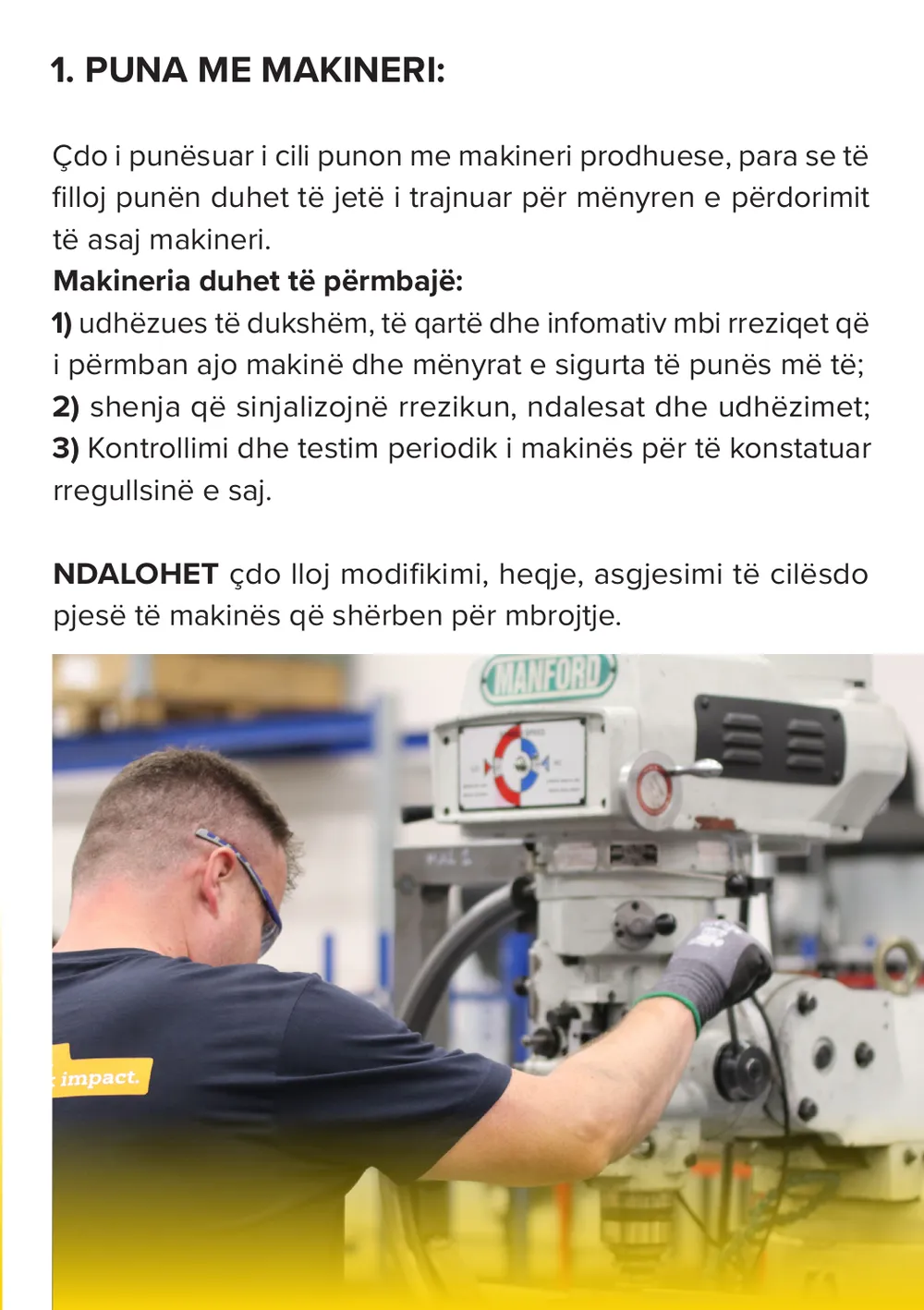
1. WORKING WITH MACHINERY: Before starting work, every employee who operates production machinery must be trained in how to use that machine.
The machinery must have: 1) visible, clear and informative instructions on the hazards of the machine and how to work with it safely; 2) signs indicating hazards, prohibitions and instructions; 3) periodic inspection and testing of the machine to confirm that it is in good order.
Any modification, removal or disabling of any part of the machine that serves for protection is PROHIBITED.
Page 5
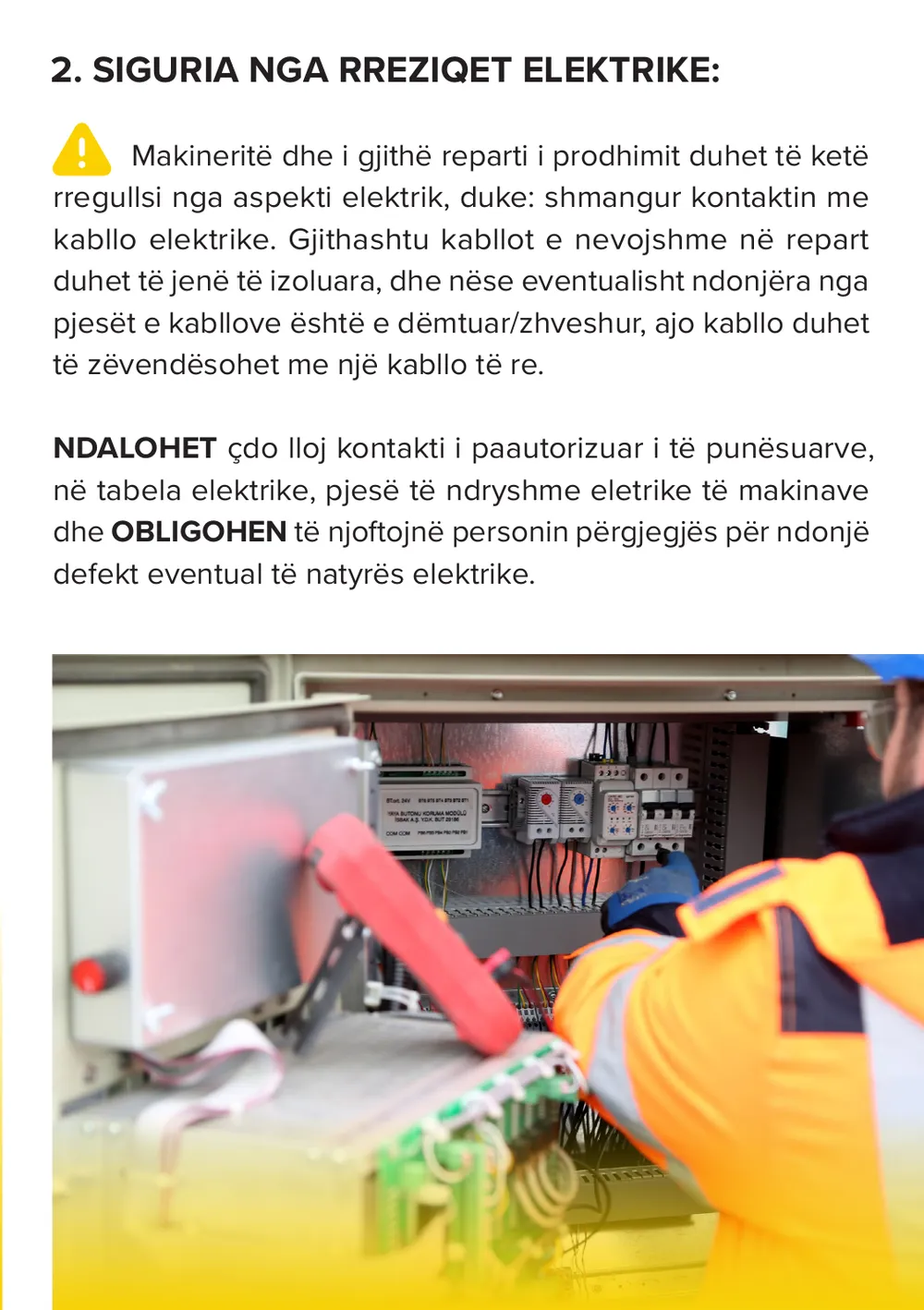
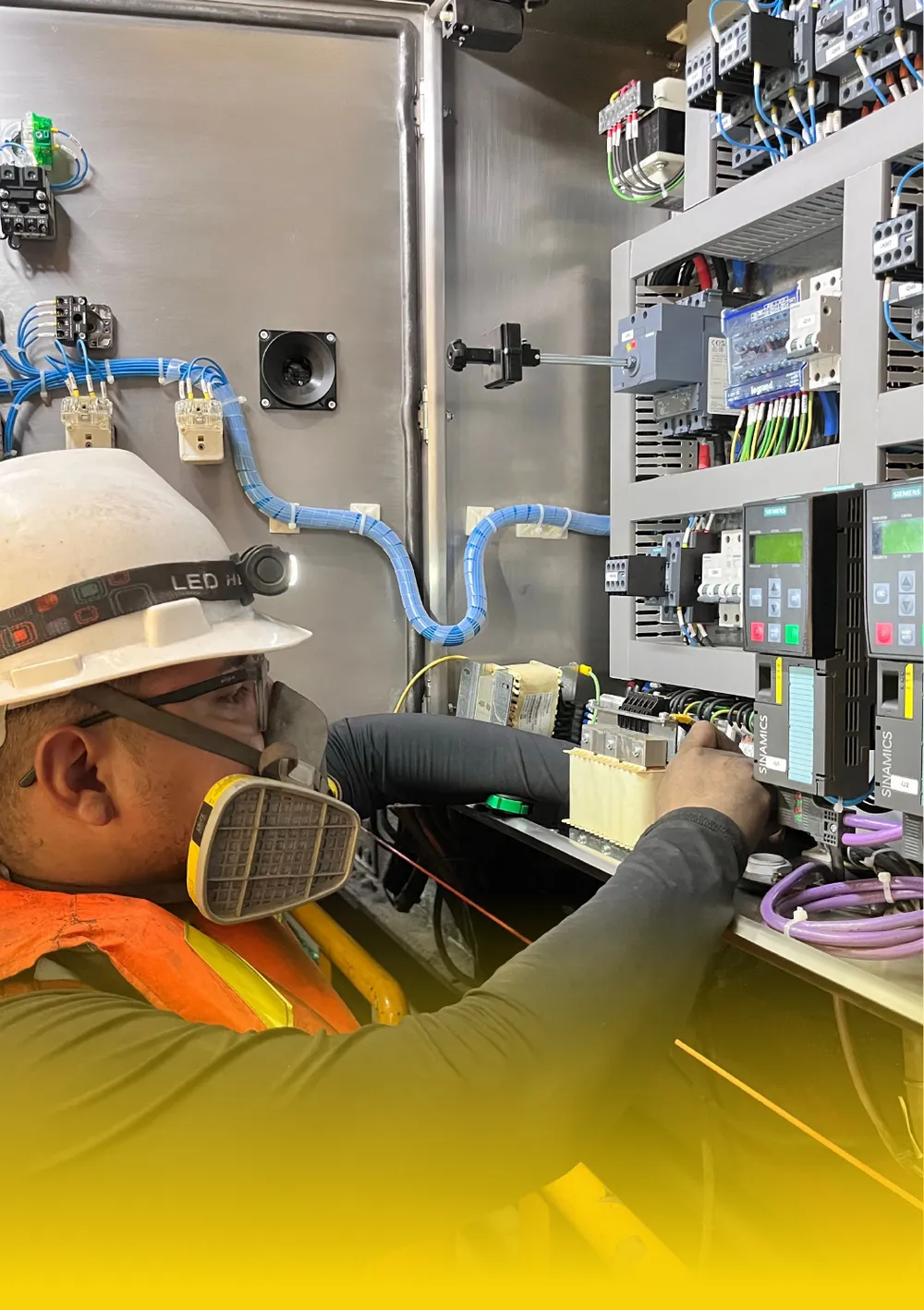
2. PROTECTION FROM ELECTRICAL HAZARDS: The machinery and the whole production plant must be electrically safe, avoiding contact with electrical cables. Cables needed in the plant must be insulated, and if any part of a cable is damaged or stripped, the cable must be replaced with a new one.
Employees are PROHIBITED from any unauthorised contact with electrical panels and electrical parts of the machines, and are OBLIGED to report any electrical fault to the responsible person.
Page 7
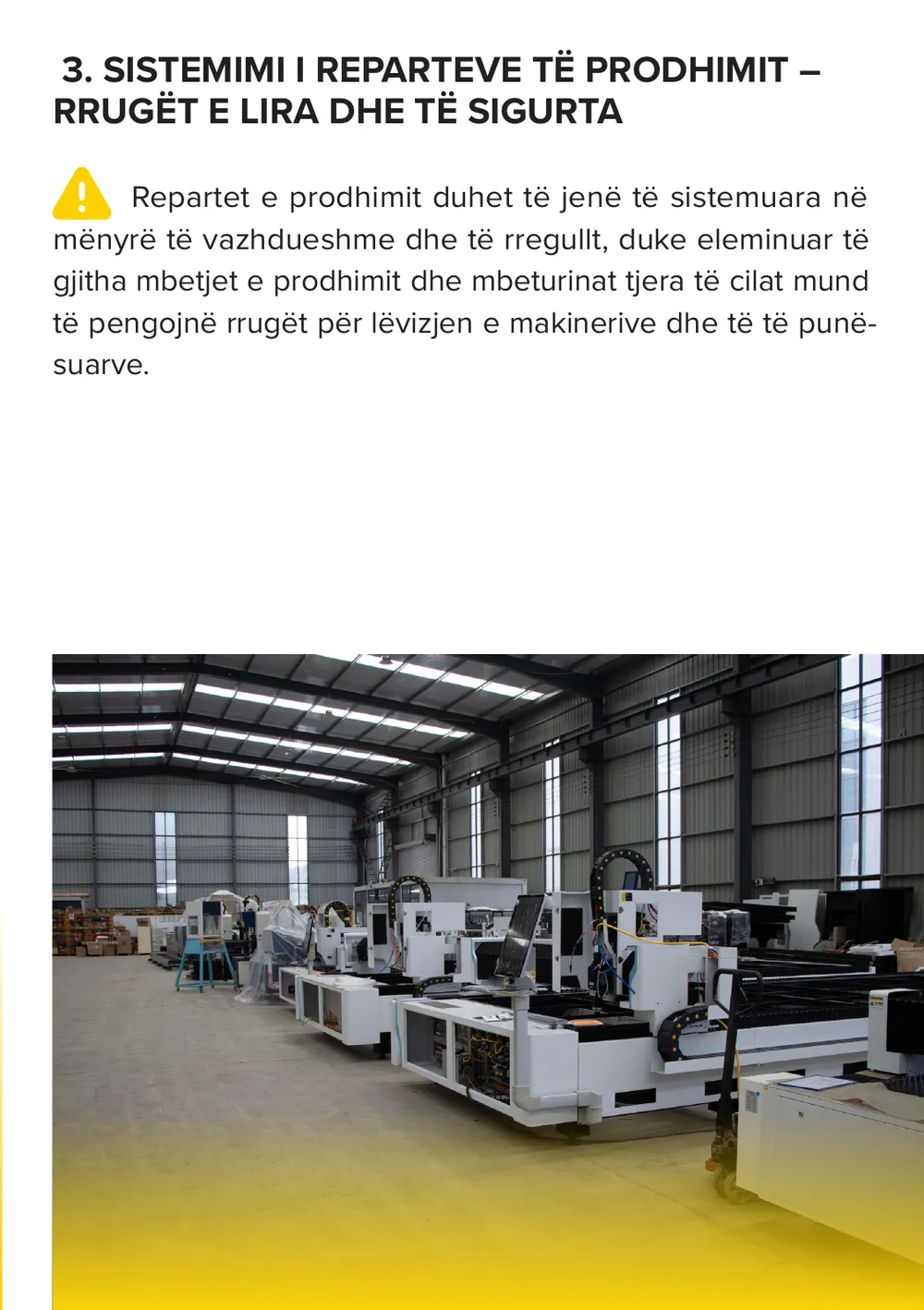
3. ORGANISING THE PRODUCTION AREAS – CLEAR AND SAFE ROUTES Production areas must be kept organised and tidy at all times, removing all production waste and other debris that could block the routes used by machinery and employees.
Page 9
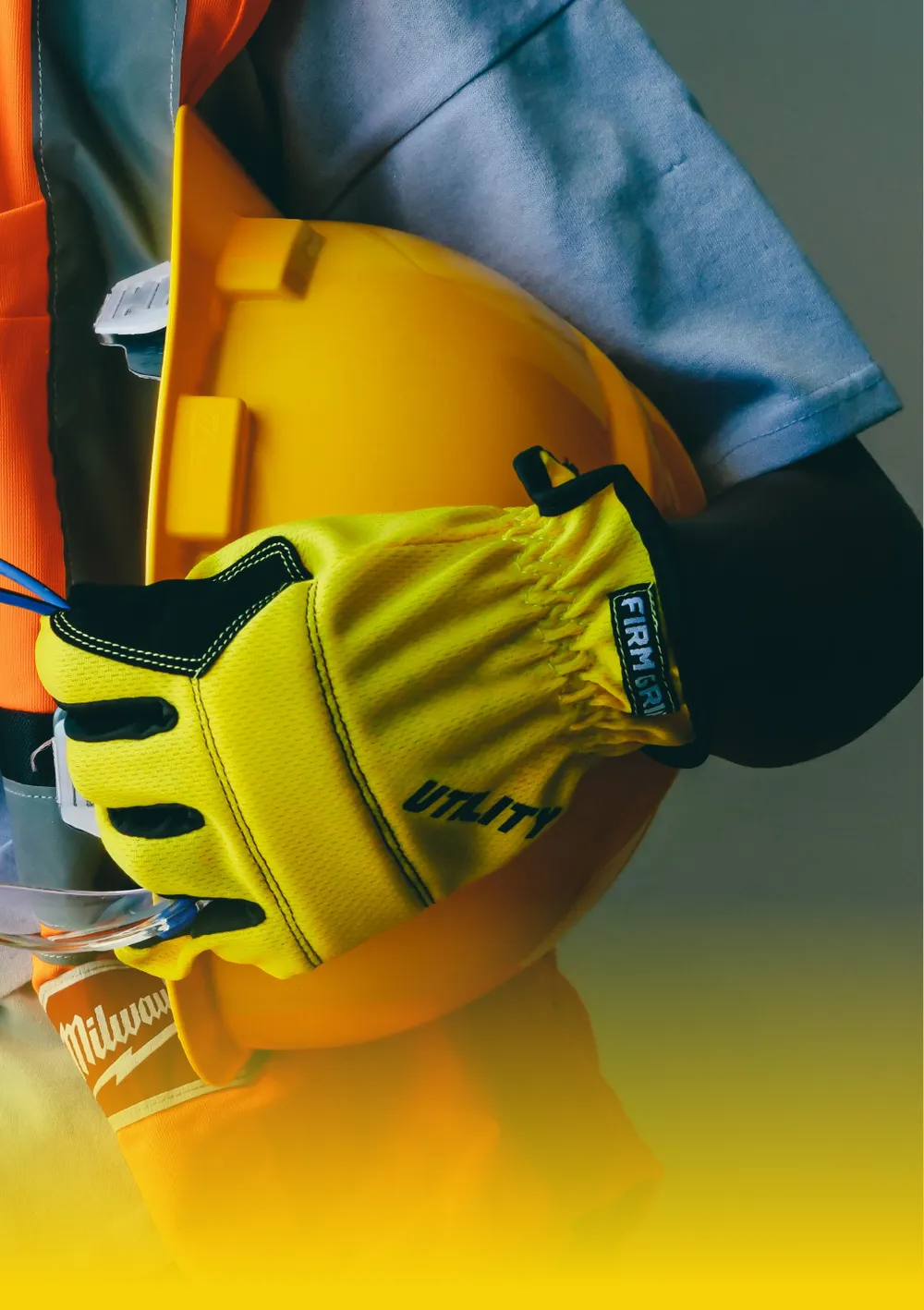
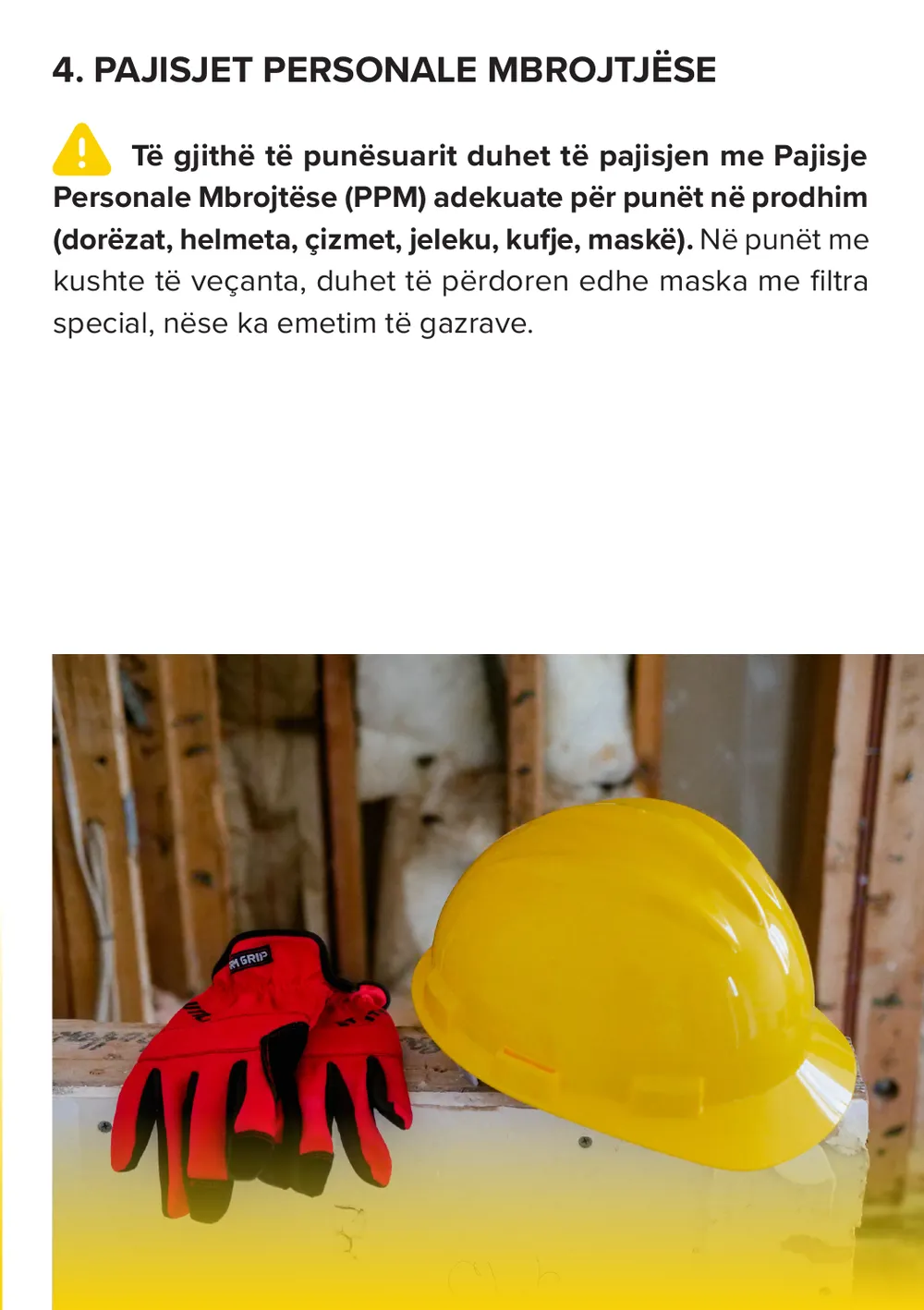
4. PERSONAL PROTECTIVE EQUIPMENT All employees must be provided with personal protective equipment (PPE) suitable for production work (gloves, helmet, boots, vest, ear defenders, mask). Where work is done under special conditions and gases are emitted, masks with special filters must also be used.
Page 11
5. EMERGENCIES AND FIRST AID In case of a fire or another disaster, remember the three emergency actions: 1. Use the fire extinguishers 2. Call the emergency services 2.1. 192 - First aid 2.2. 193 - Fire brigade 2.3. 194 - Police 2.4. 112 - General emergency number 3. Evacuate properly - use the emergency exits and follow the escape and evacuation plans.
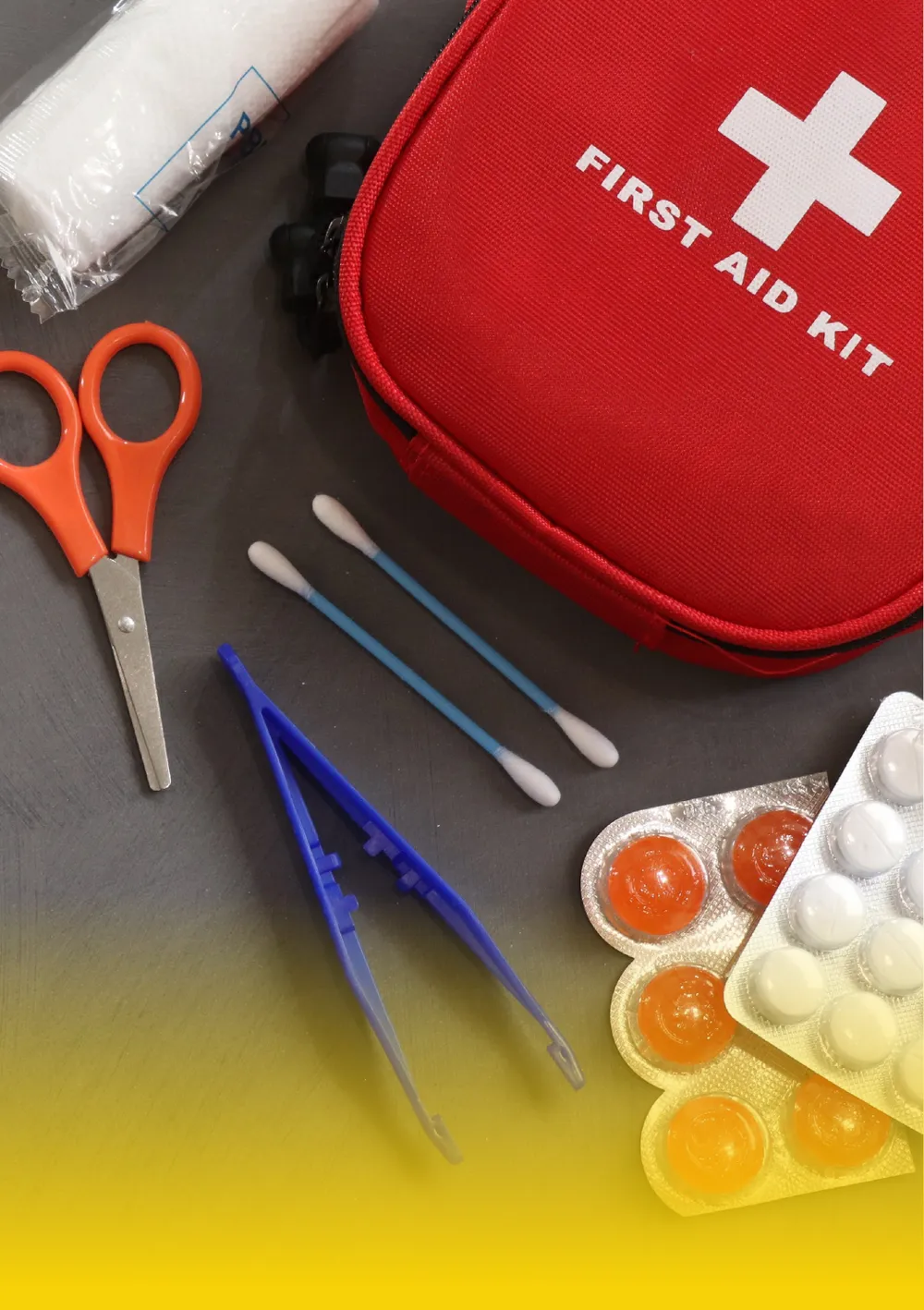
Production areas must have enough first aid kits with the essential medical supplies for a quick response, to save the life of a worker injured at work.
Page 12
SAFETY AT WORK – A LIFE SAVED! This booklet is intended for all employees in the manufacturing sector and serves as a manual for basic knowledge of protection at work.
www.hsk-ks.com info@hsk-ks.com 044 170 670 049 722 202
Guide to protection from hazards in construction
Work at height and depth, equipment testing, electrical safety on site, safe routes and personal protective equipment.


1 / 12
Click or drag a page corner to turn it. On a keyboard: left and right arrows.
Guide text (English translation)
Page 1
HSK - HEALTH AND SAFETY AT WORK
GUIDE TO PROTECTION FROM HAZARDS IN CONSTRUCTION
Construction is considered one of the highest-risk sectors for workplace accidents and occupational diseases. Every employee working in construction must therefore follow the rules on occupational safety and health.
Page 3
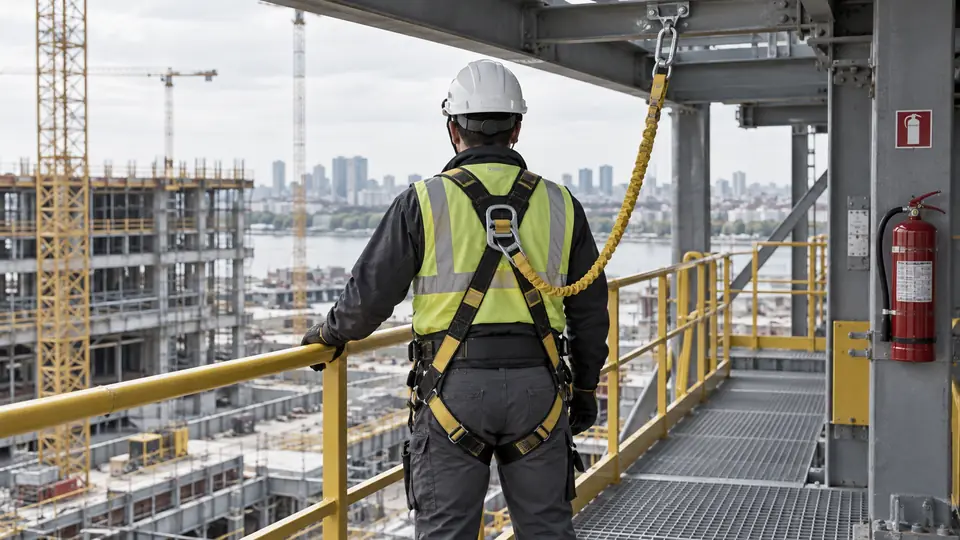
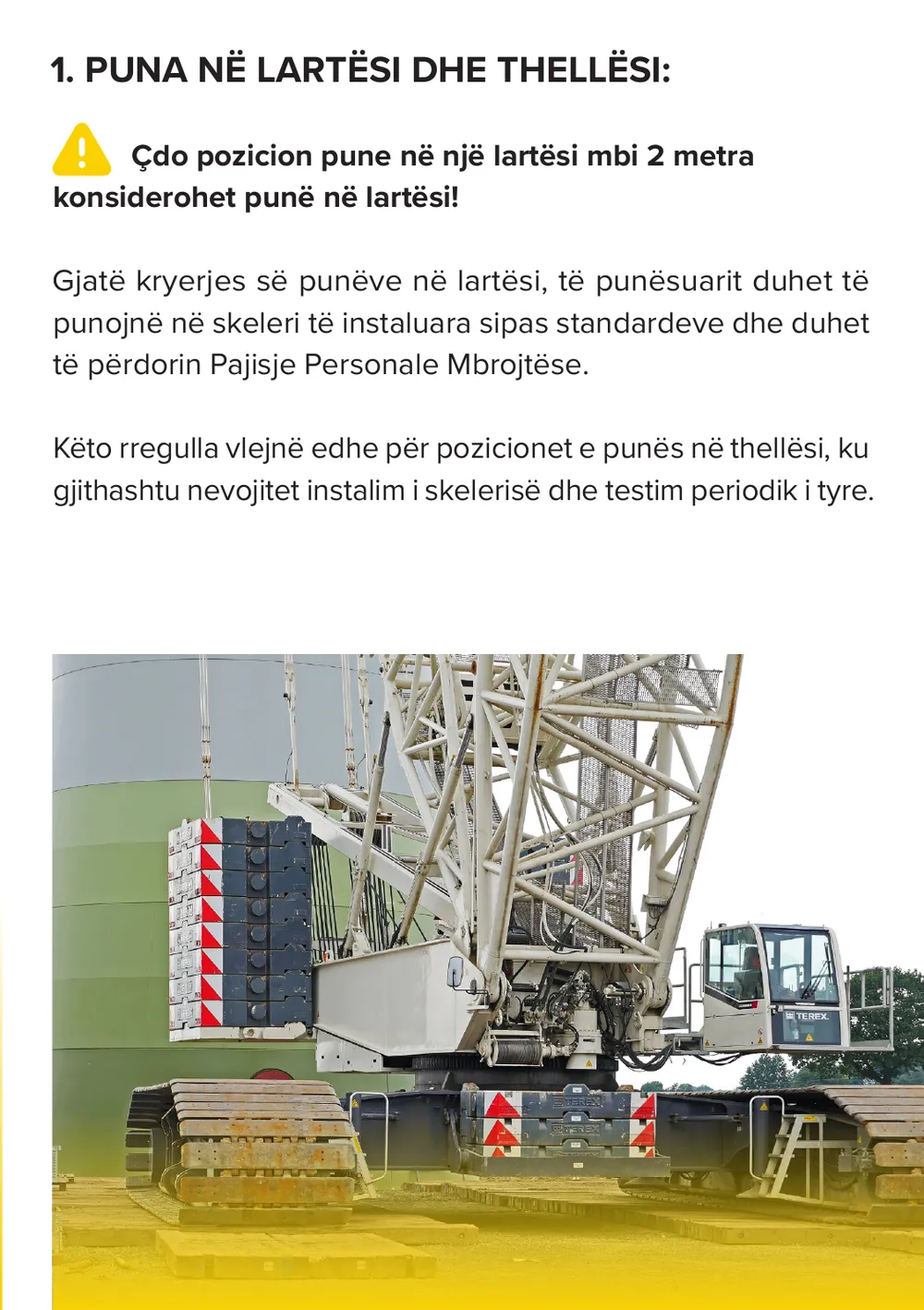
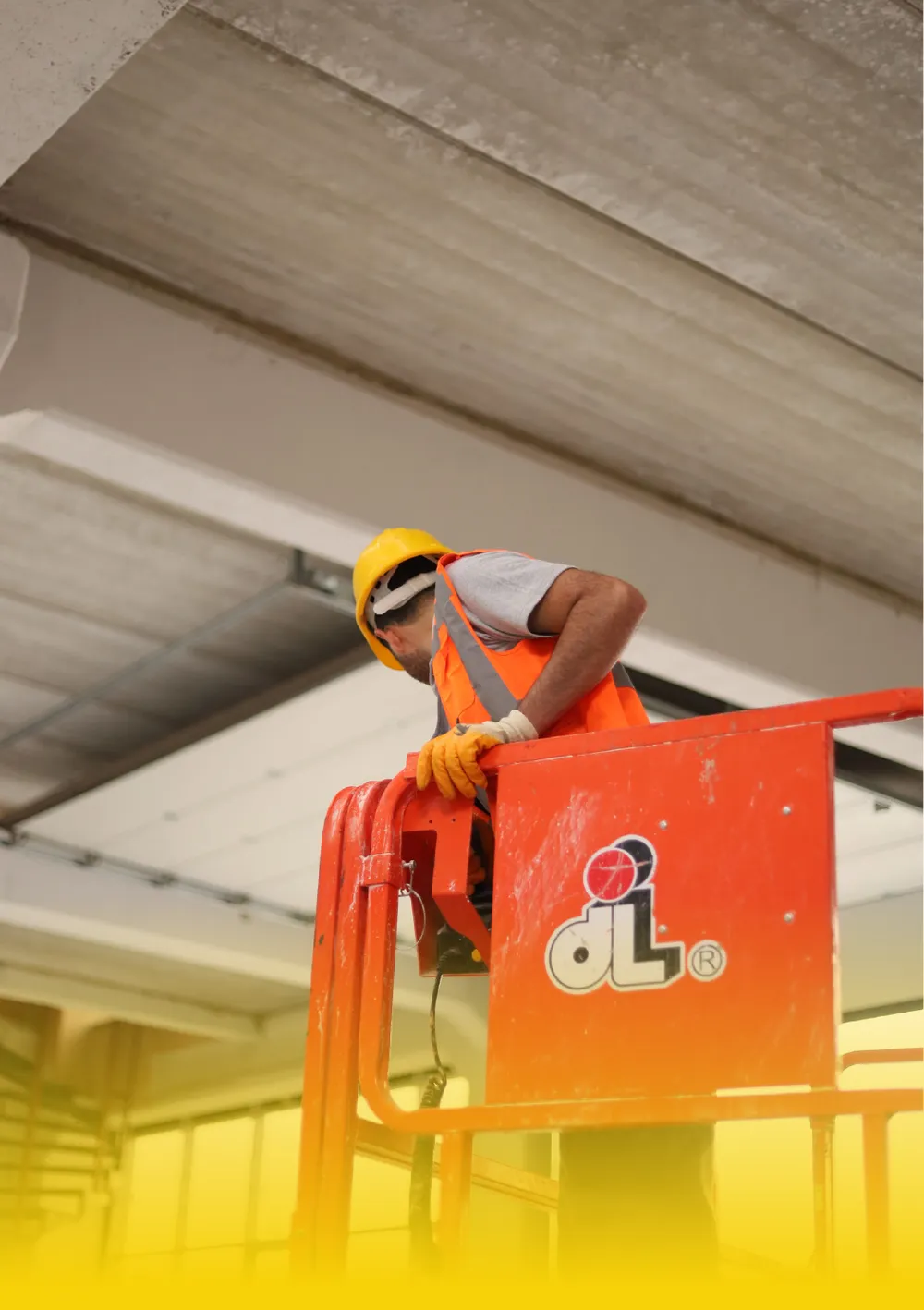
1. WORK AT HEIGHT AND DEPTH: Any work position more than 2 metres high is considered work at height!
When working at height, employees must work on scaffolding installed to standard and must use personal protective equipment.
The same rules apply to work positions at depth, where scaffolding must also be installed and tested periodically.
Page 5
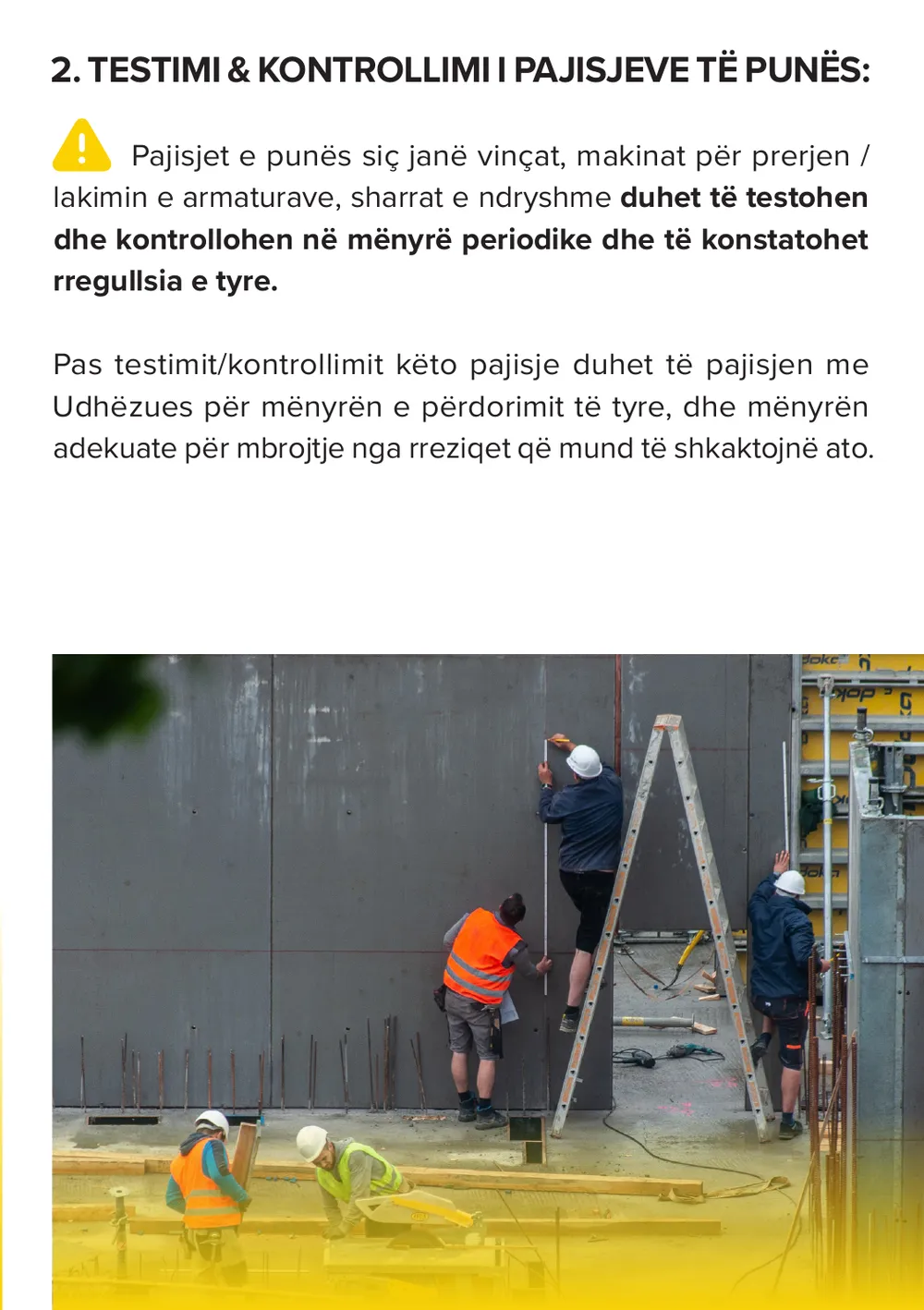
2. TESTING AND INSPECTING WORK EQUIPMENT: Work equipment such as cranes, rebar cutting and bending machines and saws of all kinds must be tested and inspected periodically to confirm that it is in good order.
After testing and inspection, this equipment must come with instructions on how to use it and how to protect against the hazards it can cause.
Page 7
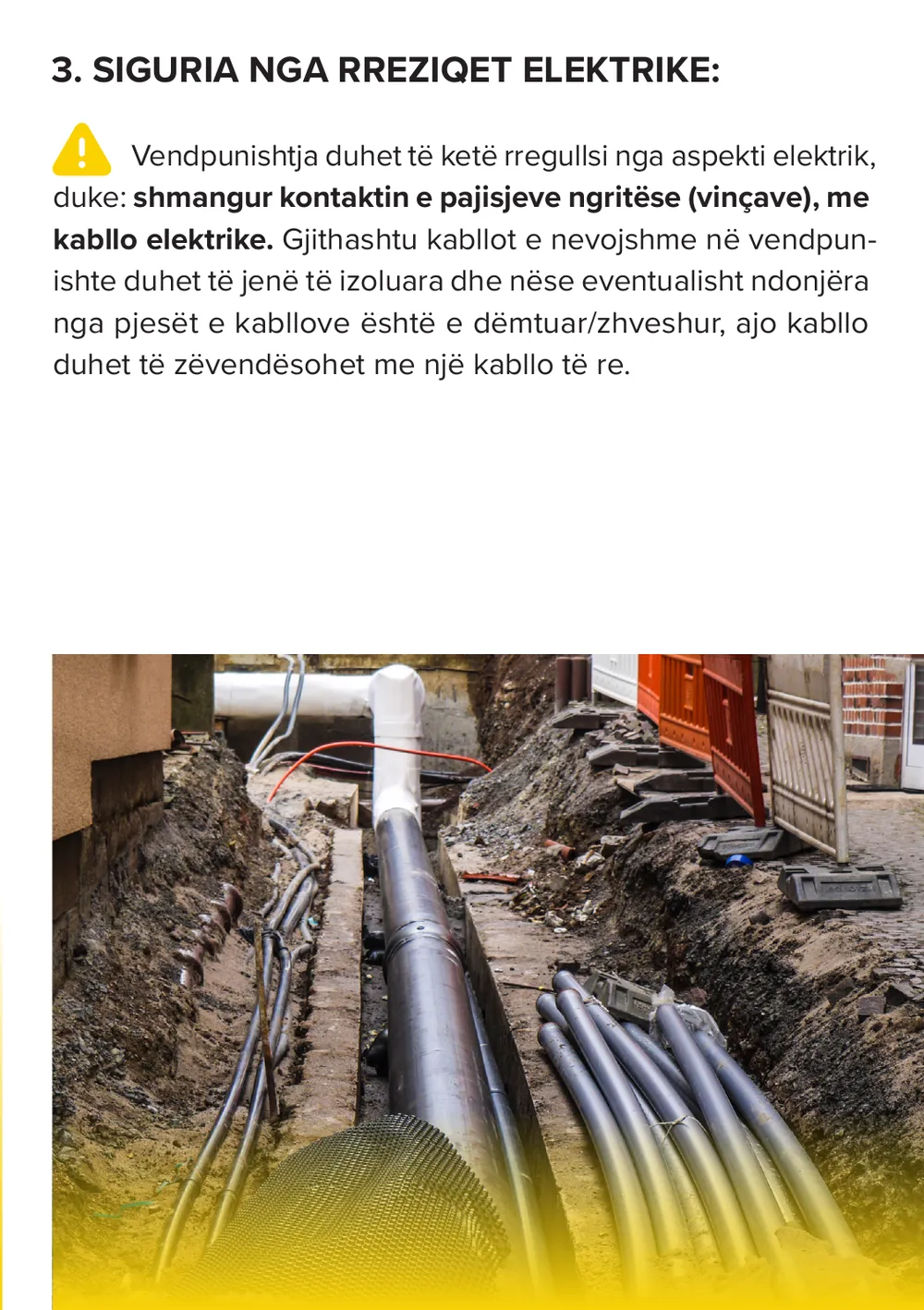
3. PROTECTION FROM ELECTRICAL HAZARDS: The work site must be electrically safe, avoiding contact between lifting equipment (cranes) and electrical cables. Cables needed on site must be insulated, and if any part of a cable is damaged or stripped, the cable must be replaced with a new one.
Page 9
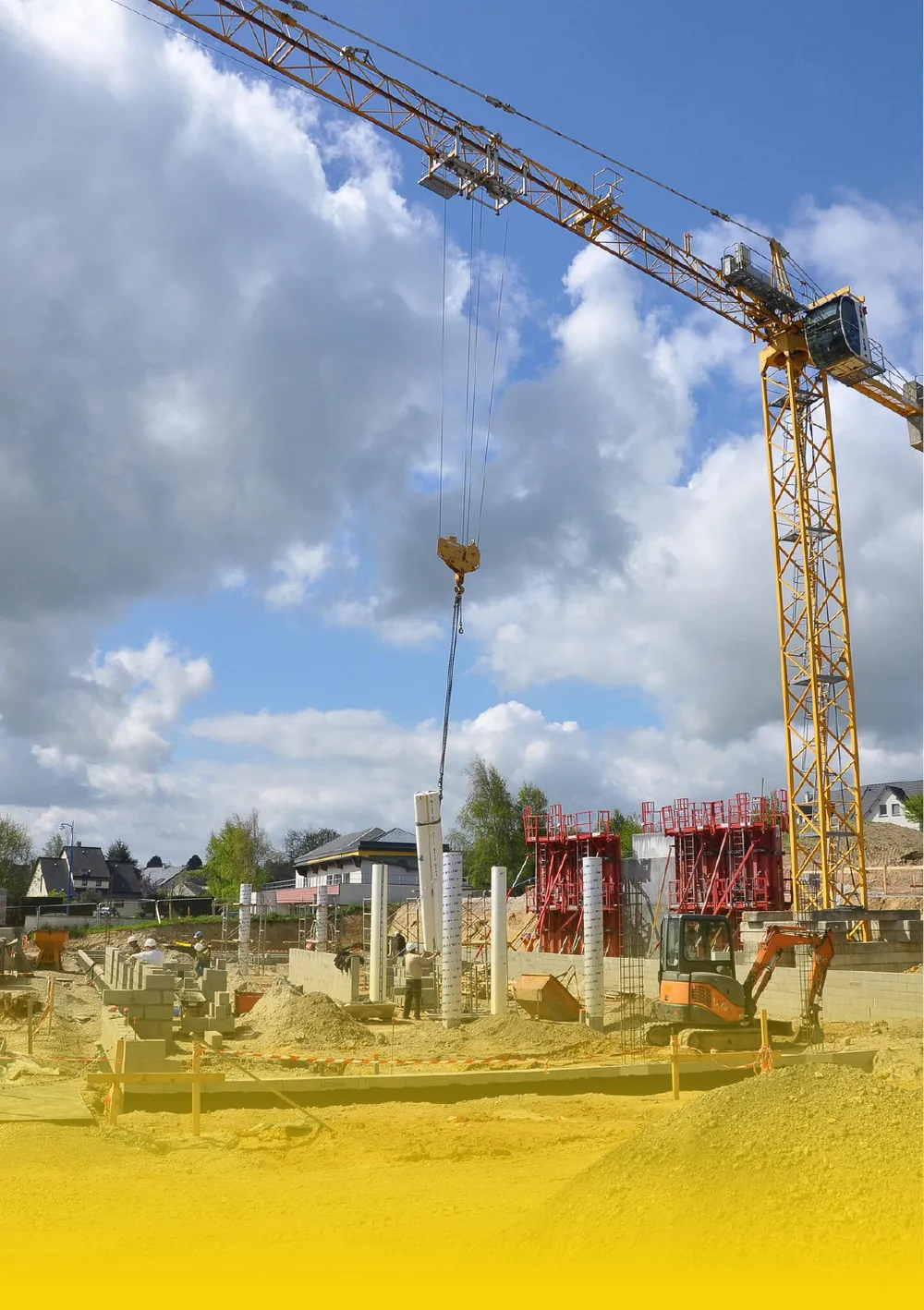
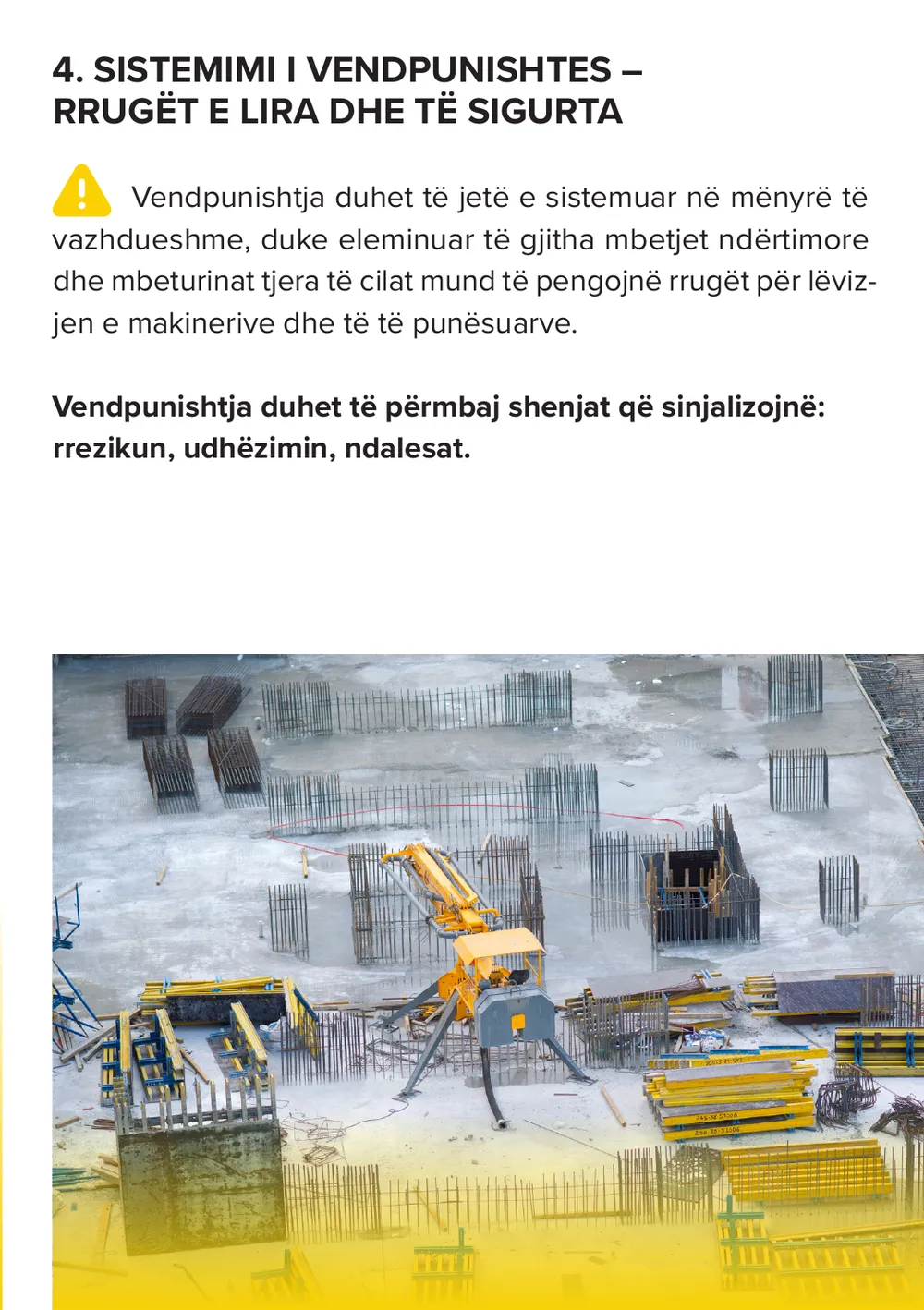
4. ORGANISING THE WORK SITE – CLEAR AND SAFE ROUTES The work site must be kept organised at all times, removing all construction waste and other debris that could block the routes used by machinery and employees.
The work site must display signs indicating hazards, instructions and prohibitions.
Page 11
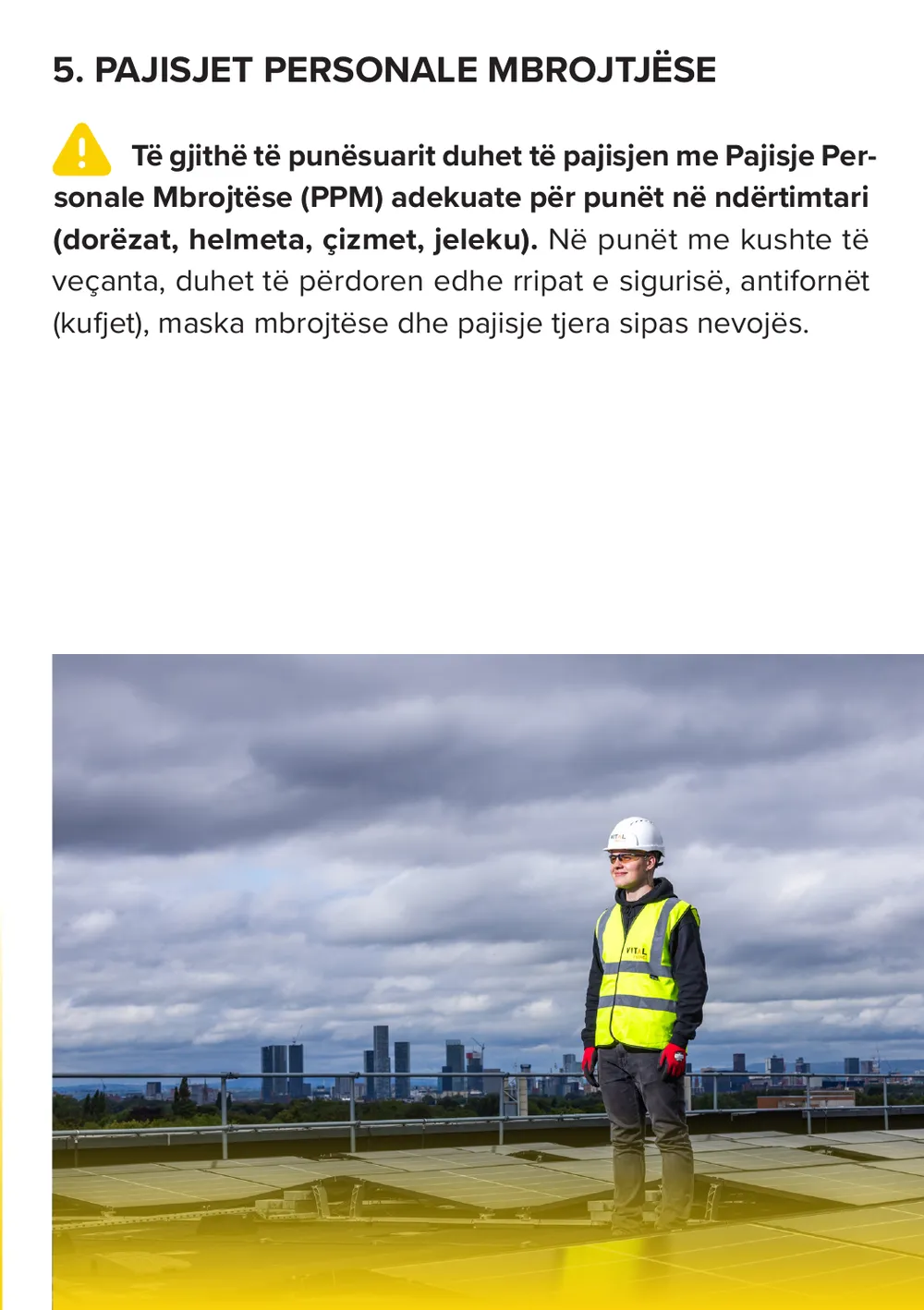
5. PERSONAL PROTECTIVE EQUIPMENT All employees must be provided with personal protective equipment (PPE) suitable for construction work (gloves, helmet, boots, vest). For work under special conditions, safety harnesses, ear defenders, protective masks and other equipment must also be used as needed.
Page 12
SAFETY AT WORK – A LIFE SAVED! This booklet is intended for all employees in the construction sector and serves as a manual for basic knowledge of protection at work.
www.hsk-ks.com info@hsk-ks.com 044 170 670 049 722 202
Want a guide for your own workplace?
We prepare instructions and training built on your organisation’s risks.